Prompt Persona
Turns how you talk to AI into a radar chart of how you think. A pushback on the weekly prompting-framework cycle.
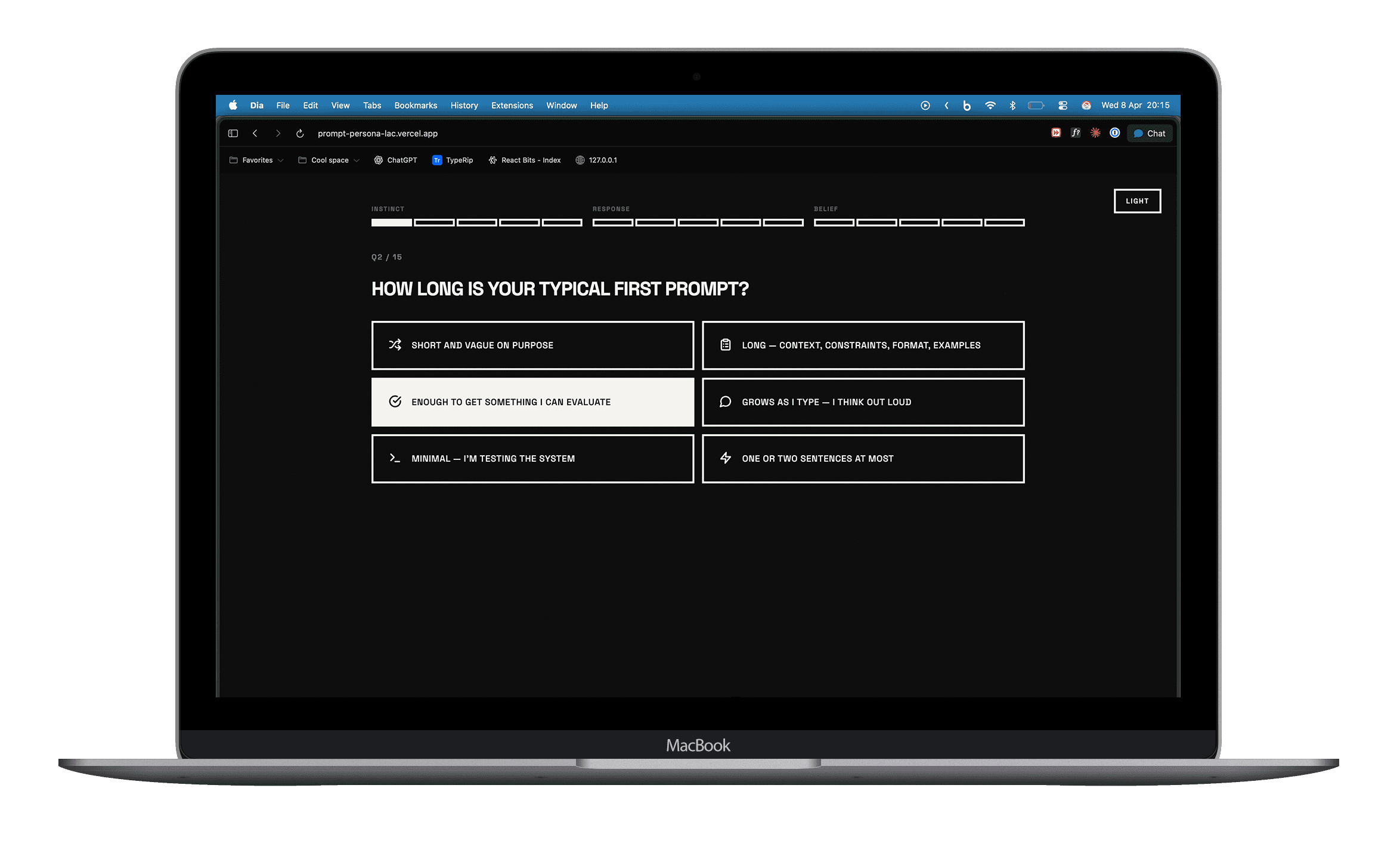
Quiz flow. 15 questions mapped across instinct, response and belief
Outcome
People see their own patterns and change how they prompt. The argument made as a product rather than another framework post.
5
Interaction dimensions
Radar
Not a score
37
Accessibility fixes
Solo
Full stack
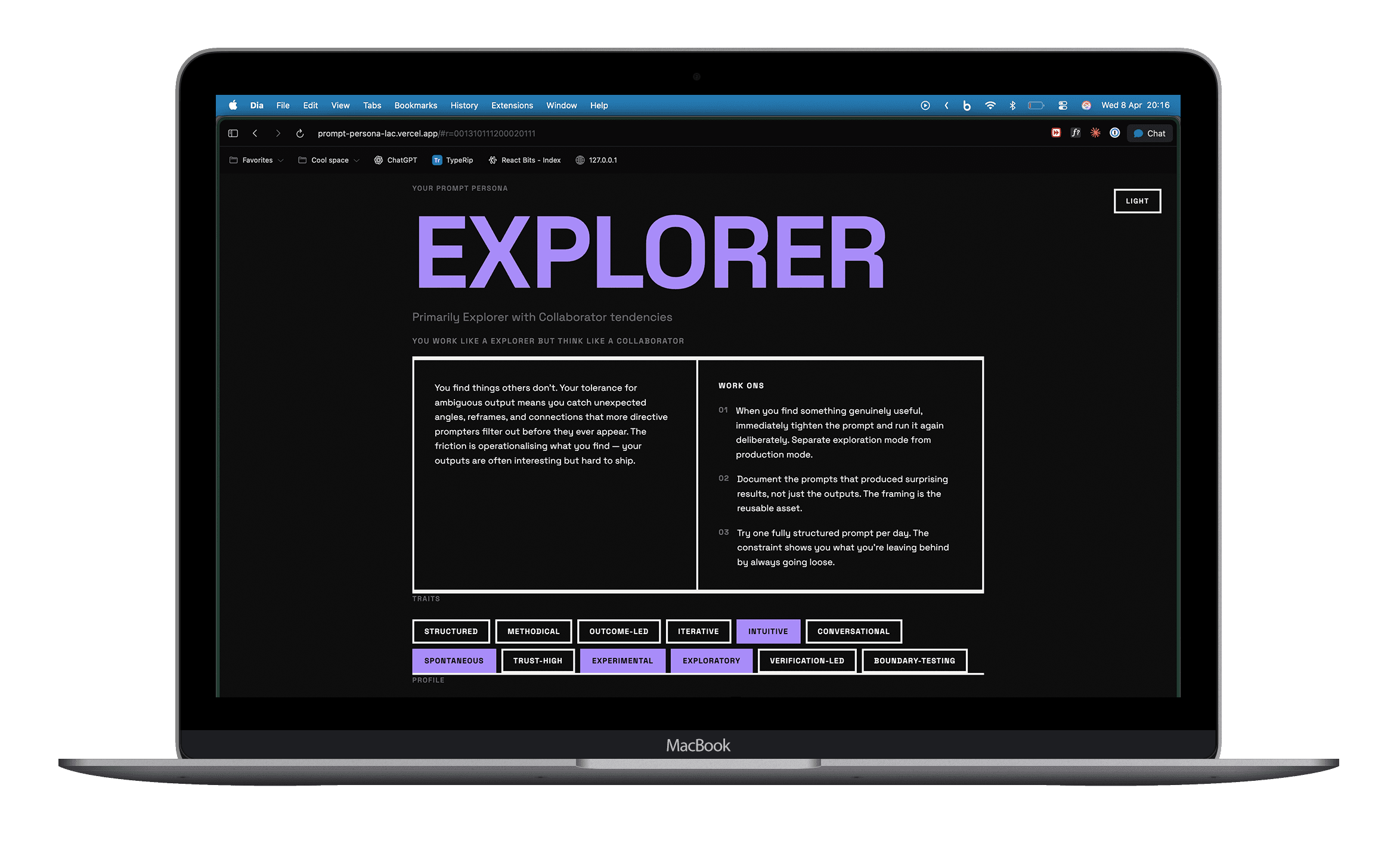
Persona reveal. Archetype plus traits, framed as strengths and work-ons
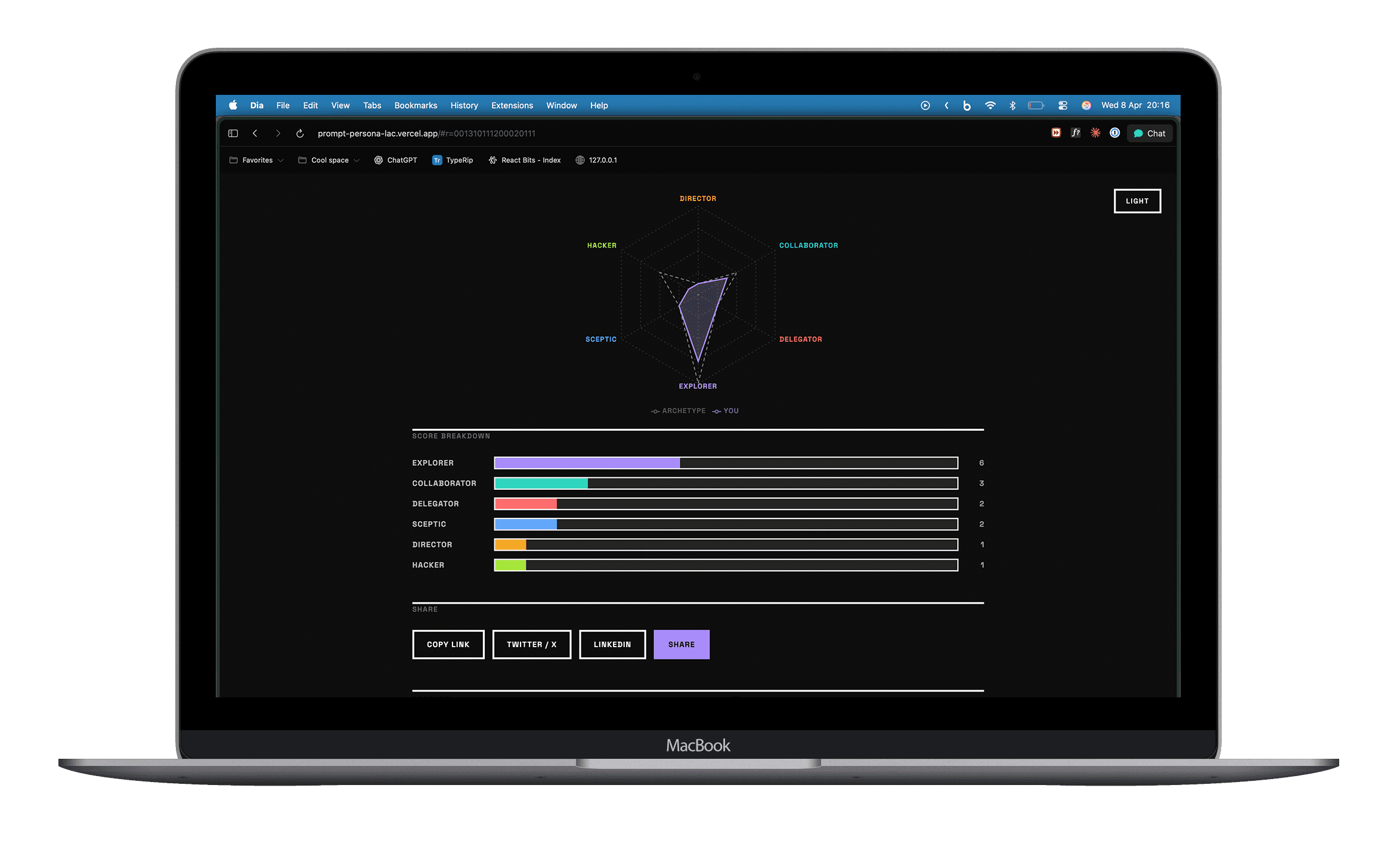
Radar chart and score breakdown with share links for social
Design decisions
The questions are generated, not a fixed set
A static quiz gets solved. People recognise which answer maps to which trait and start performing rather than answering, and the second run tells them nothing. The interaction model generates the questions instead, so no two runs feel the same and the result reflects how you actually respond rather than what you worked out the test wanted.
A shape, not a score
Five dimensions reduced to a single number invites people to ask whether they are good at prompting, which is the wrong question. A radar chart has no winning direction, only a shape, so directness and empathy read as a profile rather than a ranking. The output is recognition, not a mark.
Strengths and work-ons, never a verdict
Personality tools tip into judgement fast, and a judgemental result gets closed and not shared. Traits are framed as what this pattern gets you and where it costs you, so the reveal stays useful to read about yourself and safe enough to post.
Audited, not assumed accessible
A radar chart and a colour-coded reveal are exactly where a visual-first build quietly excludes people. I ran axe-core over the finished product rather than trusting it looked fine, found 37 issues across six files and fixed them in one pass before shipping.
Process
I built an interaction model that reads how you communicate with AI across five dimensions (directness, specificity, creativity, empathy, technical depth) and plots them as a radar chart. The model generates the questions itself, so no two runs are the same and the test cannot be gamed. Full stack with Claude Code. I ran axe-core over the finished build, fixed 37 accessibility issues across six files in one pass and shipped.
Context
Every week brings another prompting framework from a head of somewhere. The genre is a yawn. The better question is not which framework to use, it is what your own patterns say about how you think. AI is a mirror and most people never look.